


Cape Town entrepreneurs find shared ground in Uganda

Nokuthula Masiba of Sebenza Trading Solutions and Mahlubi Zibi of SAUFFT's Langa AgriHub had operated in the same city for years without properly connecting. It was only in Mbale, seated across from each other at a peer-to-peer knowledge and technical exchange in August 2026, that the two discovered how much their businesses had in common.
"The fact that they had to travel all the way to Uganda to find each other was quite a standout moment," says Lucas Tsatsi, who led Oribi's delegation on the trip. "That alone made the trip worthwhile."
The exchange is part of AfriFOODlinks, a programme connecting food entrepreneurs across African cities so they can learn from each other and grow their businesses.
Cape Town is one of the cities involved, and Oribi coordinates its participation, supporting local food and circular (waste-to-resource) businesses. In Mbale, the Cape Town delegation showcased four of those businesses.
Tsatsi's delegation to the exchange was four people strong, which included Matt Baker of Waste-ED and Melian Dott of BAOM.
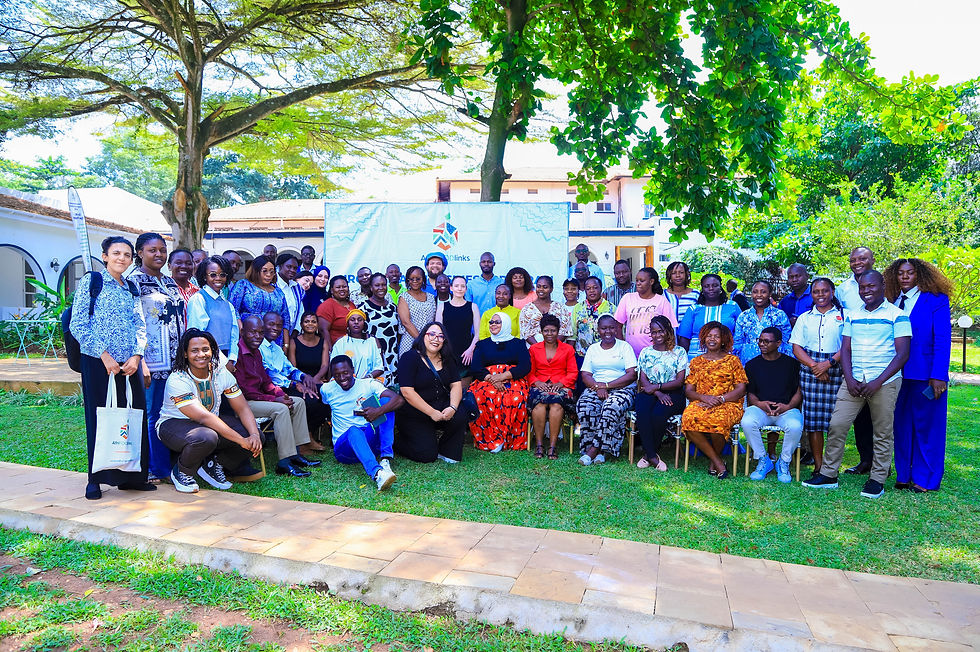
The group joined entrepreneurs from Kisumu, Mbale, Ouagadougou and Tunis for a peer-to-peer exchange programme of talks, product showcases, field visits and peer learning.
Melian and Nokuthula engaged most deeply in the one-on-one peer exchanges, and those personal conversations were clearly where real learning happened for each of them.

Nokuthula reflected afterwards that the exchange had also served as a kind of retreat. She hadn't anticipated how valuable it would be to step away from her business, especially given her usual anxiety about not being hands-on.
The trip confirmed something Tsatsi had suspected before but not seen so clearly: that small food businesses in different African cities are wrestling with the same core problems, from accessing finance and growing their operations to meeting the compliance requirements needed to reach bigger and more formal markets.
This also underlined Oribi's approach to enterprise development, where Oribi does not provide one-off interventions but builds the surrounding ecosystem, financing pathways, peer networks and market linkages that let entrepreneurs sustain themselves long after a programme ends.
Oribi backs innovators building solutions that widen economic participation while meeting social, economic and ecological goals in their local communities, with a focus on unlocking markets that have gone untapped.
During the trip, Matt and Zibi also added significant value by bringing broader ecosystem experience, multi-stakeholder partnership models and a grounded understanding of building circular businesses within communities, expanding the range of Cape Town's contribution beyond what the programme's Work Package 3 (WP3) alone could have offered.
"Where they were coming from and where they were going"
The exchange itself ran over two days, packed with expert-led peer-to-peer discussions, networking and founder clinic sessions where entrepreneurs could put a real problem on the table and get feedback from their peers.
But it was the field visits, on day three, that stayed with him. The delegation spent time with AvoGlow Uganda, a business founded by Idi Mukasa Bate that turns surplus and lower-grade avocados from local smallholder farmers into hair care products, teas and cosmetics. A compelling, community-rooted example of waste-to-value creation in practice.
The second stop was Fazum Millers, run by Fatuma Issa, who took delegates on a tour of her newly established factory space. What made this visit particularly memorable was that the factory was still in transition: new machinery was arriving and being set up. At the same time, in one space, you could see the old way of production was still visible alongside the new.
You could see, in one space, where they were coming from and where they were going.
That tangible moment of scale-up, still in process, was both grounding and inspiring, something Melian remarked on during the tour.
"Not an anomaly"
Beyond the new partnership, the biggest takeaway from Mbale was how familiar the problems sounded, no matter which city an entrepreneur had travelled from. Record-keeping, financial management and market-access compliance hurdles that stand between a small business and a bigger market came up again and again, from Kisumu to Ouagadougou to Tunis.

For the delegates witnessing this convergence across very different contexts was humbling and clarifying as it confirmed we are focused on the right issues and that our entrepreneurs are not an anomaly.
What comes next
Oribi now acts as a monitor and facilitator for Sebenza and Langa AgriHub as they work to formalise their supply arrangement, folding lessons from the founder clinics into its ongoing mentoring work. Tsatsi is also staying in contact with the other city coordinators he met in Mbale, from Kisumu, Ouagadougou and Tunis, to explore further collaboration down the line.
For the delegates the trip left a mark beyond the programme outcomes. It was an eye-opener around the power of community development and what it truly means to be resilient.
The tour delivered a clear, attributable value for Oribi and a concrete new business partnership for one of it Micro, Small, and Medium-sized Enterprises (MSMEs), deeper peer networks for our entrepreneurs, and practical lessons that will strengthen its incubation and mentoring going forward.
The mission was well aligned with Oribi's role as Cape Town's WP3 hub partner and with AfriFOODlinks' broader goal of accelerating innovative, women- and youth-led agri-food businesses through inclusive, multi-city collaboration.


